
If you’re a photographer, filmmaker, or content creator, choosing the right camera memory cards for your shoot is important.
From burst-mode photography to 8K video, your memory card needs to keep up with your camera’s performance. In this guide, we’ll break down all the different types of SD cards used in cameras, their key features, typical usage, prices, and which cameras they’re best suited for.
Table Of Contents
1. SDHC Cards (Secure Digital High Capacity)

SDHC memory cards are a popular choice for beginner photographers and those using entry-level DSLRs or point-and-shoot cameras.
These cards offer storage capacities ranging from 4GB to 32GB and use the FAT32 file system.
They’re typically labeled with speed classes from Class 4 to Class 10, which determine how quickly data is written to the card.
SDHC cards are suitable for basic 1080p video recording and standard JPEG photography, but they’re not built for shooting RAW files or high-resolution video.
These cards are commonly used with cameras like the Canon 1300D, Nikon D3500, and various Sony Cyber-shot models.
📷 Common Cameras:
- Canon 1300D
- Nikon D3500
- Sony Cyber-shot series
2. SDXC Cards (Secure Digital eXtended Capacity)

SDXC cards offer much larger storage capacities, ranging from 64GB up to 2TB. They use the exFAT file system and are capable of supporting ultra-high-definition video, RAW photo bursts, and high-speed data transfers.
These cards are perfect for mirrorless cameras and more advanced DSLRs. SDXC cards are available in different speed classes including U1, U3, and video-specific ratings like V30, V60, and V90.
These cards work well with cameras like the Sony Alpha A6400, A7 IV, Canon EOS R50, and Nikon Z6 or Z7.
📷 Common Cameras:
- Sony A6400, A7 IV
- Canon EOS R series
- Nikon Z6, Z7
3. UHS-I vs UHS-II vs UHS-III: What’s the Difference?
UHS stands for Ultra High Speed and refers to how quickly data is read and written. UHS-I cards offer transfer speeds up to 104 MB/s, making them suitable for general photography and Full HD to 4K video.
UHS-II cards include a second row of contacts for faster speeds, reaching up to 312 MB/s, which makes them ideal for RAW photography, 4K 60fps video, and professional shooting.
UHS-III cards, though less common, can go up to 624 MB/s and are built for extremely high-resolution video and ultra-fast bursts.
These define the bus interface speed — how quickly data is read/written.
| Type | Max Speed | Best For |
|---|---|---|
| UHS-I | 104 MB/s | HD/4K video, general photography |
| UHS-II | 312 MB/s | RAW bursts, 4K/6K video |
| UHS-III | 624 MB/s | 8K video, cinema production |
4. microSD Cards (with Adapter)

microSD cards are compact and primarily designed for smartphones, action cameras like GoPros, and drones such as the DJI Mini 3 Pro.
However, when used with an SD adapter, they can also be inserted into DSLRs and mirrorless cameras.
Though not as fast or durable as full-size SD cards, microSD cards rated with V30 or higher can handle 4K video recording without issues.
📷 Common Devices:
- GoPro Hero 11
- DJI Mini 3 Pro
- Sony ZV-E10 (with adapter)
5. CFexpress Type A Cards

CFexpress Type A cards are a relatively new format developed for professional mirrorless cameras, especially in the Sony ecosystem.
These cards are smaller than SD cards but significantly faster, with read speeds up to 800 MB/s and write speeds up to 700 MB/s.
They’re essential for capturing 4K and 8K video in high bitrates or shooting continuous RAW photos without buffer issues.
These cards are used in premium cameras like the Sony A7S III, FX3, and A1.
📷 Used With:
- Sony A7S III
- Sony FX3
- Sony A1
🛒 Buy on Amazon:
👉 Sony CFexpress Type A 160GB – ₹35,999
6. CFexpress Type B Cards
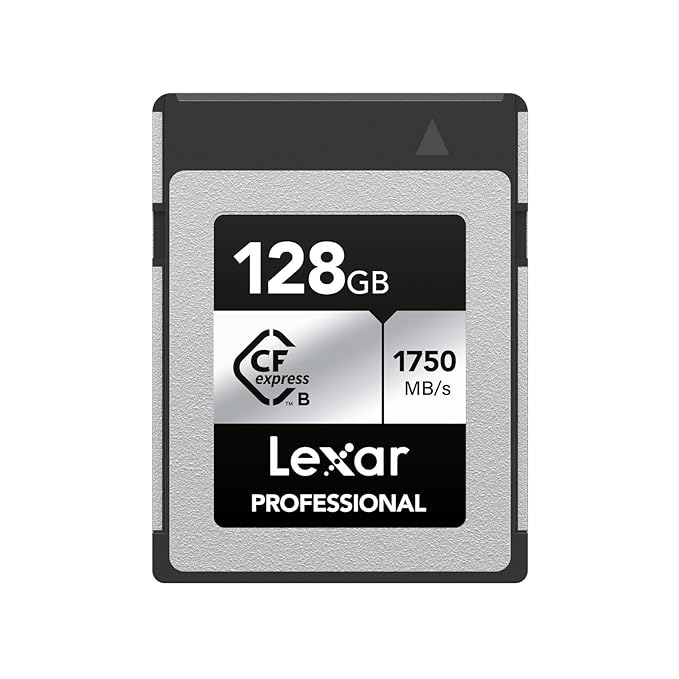
CFexpress Type B cards are even faster and physically larger than Type A cards.
They’re designed for high-end professional cameras that demand extreme performance.
These cards support read speeds of up to 1700 MB/s and write speeds of up to 1400 MB/s, making them ideal for shooting 8K RAW video or high-speed photography in large bursts.
Cameras like the Canon EOS R5, Nikon Z9, and Panasonic S1H use CFexpress Type B cards.
📷 Used With:
- Canon EOS R5
- Nikon Z9
- Panasonic S1H
7. XQD Cards
Before CFexpress became the standard, XQD cards were the go-to choice for high-speed storage.
These cards are durable, fast, and used in professional-grade DSLRs and cinema cameras. Although not as widely supported today, they are still used in models like the Nikon D850 and older Nikon Z6 models.
📷 Used With:
- Nikon D850
- Nikon Z6 (older units)
- Sony FS7
📌 Tips to Choose the Right SD Card for Your Camera
- ✅ Check your camera manual to see compatible card types and speed classes.
- ✅ For 4K video, go for UHS-I V30 or UHS-II.
- ✅ For RAW burst or 8K, use UHS-II or CFexpress.
- ✅ Buy from trusted sellers to avoid counterfeit cards.
- ✅ Always format the card inside your camera before use.
FAQs
Q1. Can I use a microSD card in a DSLR?
Yes, with an adapter. However, it’s not ideal for 4K video or RAW bursts.
Q2. What’s the best SD card for wedding videography?
Use a UHS-II SDXC card or CFexpress Type A (for Sony cameras) to handle high bitrate 4K recording.
Q3. Do faster SD cards affect photo quality?
Not photo quality, but they reduce buffer time and enable longer burst sequences.
Q4. Is CFexpress worth it?
Yes, if you’re shooting 4K/8K RAW, slow motion, or cinematic video professionally.

Subscribe to never miss a post!
Leave a Reply